

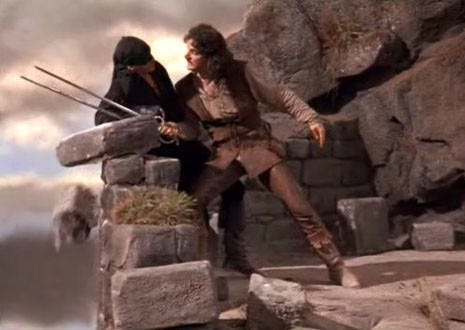
Why would your left-handed strikers want to fight like a right-handed person? Let’s get this link out of the way: research shows that lefties are more represented in combat sports and have a higher success rate than right-handed people. Southpaws aren’t the outliers anymore and something seems to draw them to combat sports.
In competition training for strikers, you don’t have time to train every strike (say, a “jab”) equally on both sides - pick your stance and dedicate your time efficiently. For most people that should mean the orthodox stance - but it doesn’t always work out that way.
For self-defense and wrestling, you do need to train both sides. And yet it’s estimated that up to 90% of people are right-handed. Is it efficient to train an equal amount of time defending against a lefty’s punch? (I talked about that in my book here. Check it out!)
Left-handed people are something we need to discuss in Kajukenbo: lefties as fighters and lefties as aggressors. As martialists this becomes important because being left-handed, people 1: will approach problems differently and 2: are affected by life differently. Both of those can have an impact on their fight records and reasons for fighting in the first place. If you’re a coach, you need to think on these both.
Left-handed athletes also do better in sports where decisions have to be made more quickly, like table tennis and baseball. I think we can make an easy connection to the time-constraints you’ll find in self-defense too. This might be due to the creativity they’re forced to cultivate as they grow, or could be right-handed people’s difficulty in understanding how a left-handed athlete moves and thinks.
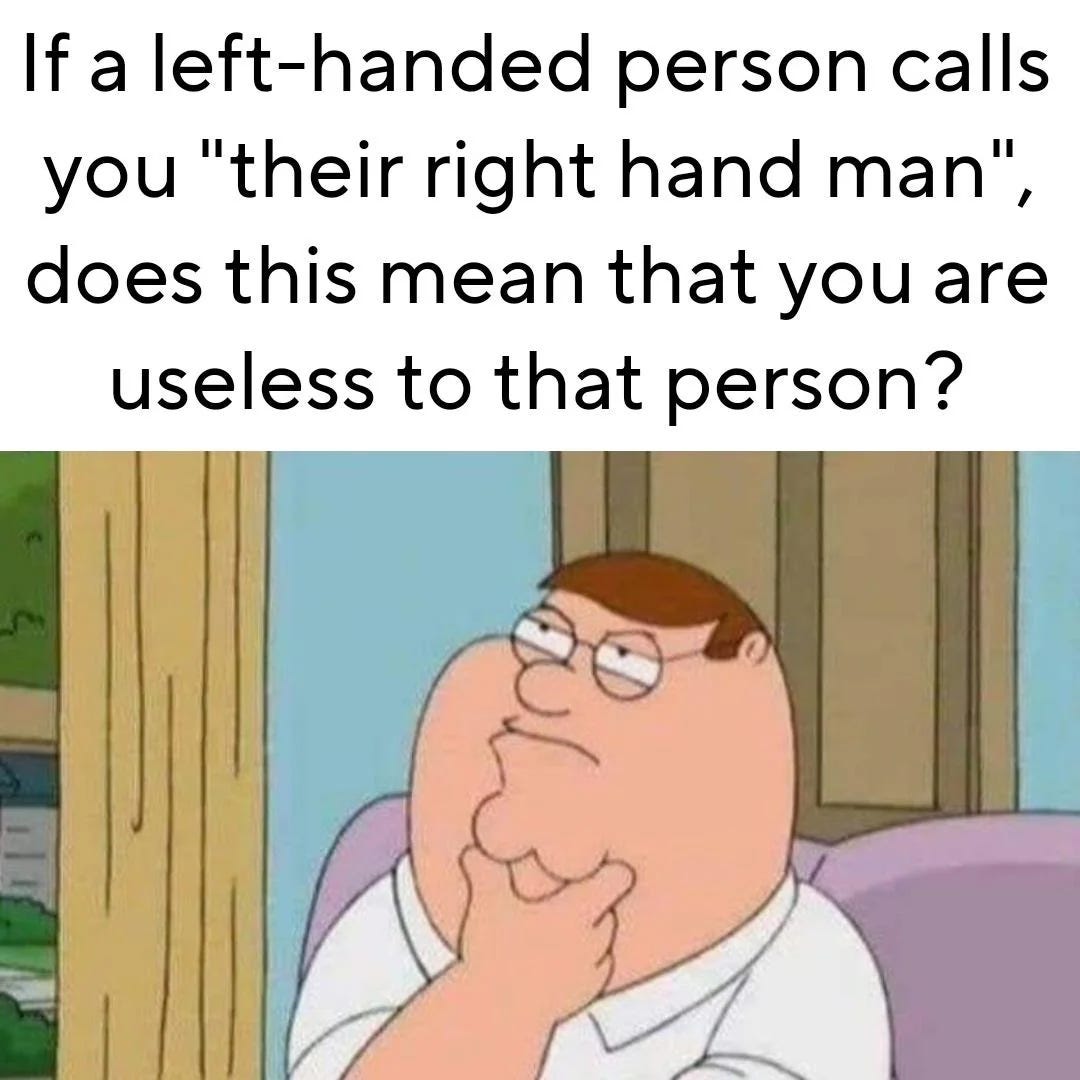
About 45% of people on the autism spectrum are said to be left-handed or “not right handed”. People with ADHD are said to have a 27% chance of being left or mixed-handed. Dyslexic people aren’t more likely to be left-handed, it seems - but they are more likely to be “mixed-handed”. “Mixed-handed” doesn’t mean ambidextrous; it means they do some things with their right hand and some things with their left hand. Interesting to note that this happens to people who have a naturally hard time as children discerning the letters “d” and “b”.
People on the autism spectrum have a harder time navigating life but often develop skills and advantages of their own that make them stronger. I think left-handed people do the same thing, hence the (unproven) anecdotes that said left-handed people die sooner but are more creative.
It’s said that if both parents are right-handed, there’s about a 10% chance a child will be left-handed. If one or both parents are left-handed the chance can go up to 25%. We don’t know how much of being a lefty is based on genetics and how much is based on environment, but the percentages also seem to vary a little depending on the culture of the person in question.
Culture. Now I get to talk about Japan. Until the 1970s/'80s, writing with your left hand in Japan was always punished. In America, that same trend had started facing opposition in the 1940s or so. To a point, it makes sense that Japan took so long to get with the program, because of Japanese handwriting.
Writing kanji (Chinese characters) requires a certain flow, a certain push/pull of the pen. It's actually similar to the motions you might feel when doing Tai Chi. Believe it or not, the hiragana characters “ソ” and “ン” are completely different and the stroke order changes how they look.
People who practice Japanese calligraphy are still strongly encouraged to use their right hand today. Guess what happens when left-handed people take up Kendo or Kyudo?
I’m not left-handed, but I have tried using a pair of standard scissors with my left hand. Not the ambidextrous ones that are more available now.
Try it. My understanding is that the discomfort/awkwardness/possible muscle cramp you’ll feel has nothing to do with using a hand you haven’t practiced with - the scissors literally only work right if you use your right hand.
And thanks to anti-lefthand stigma throughout humanity’s history, a lot of life for left-handed people has been like using a pair of scissors with the wrong hand. Imagine what that does to a person’s psyche.
And then look at how much of our traditional Kajukenbo rewards right-handed people and puts hurdles in front of left-handed fighters.
Our first Grab Art has one real “strike”: a right-leg front kick. Studies seem to show that at least 60% of left-handed people are also left-footed. So our first grab art is already telling our left-handed people to deliver their one strike here with their off-foot.
The main strikes of our first Punch Attack are a right-leg front kick and a final right-hand punch.
The first strike in our first pinan starts in the salutory squatting position and involves a right-hand punch.
When doing line-drills, many instructors have all students work fighting techniques from a right-leg back stance.
This is all a problem. And there are two answers I’ve found.
The first is working the left side. James Juarez has long made students think about doing all of our curriculum on the “left side”. A great thing about our usual Pinan 1 is that outside of the salute, the first real “attacking” motion is a left-hand punch, indicating that the Emperados wanted us to think about using our offhand.
But we’ll also see that the first three blocks of the form are against a right-left-right punch combination. What if the attacker is left-handed and throws a left-right-left combo? Practice Pinan 1 on the left side - switching your right-hand techniques to left-hand techniques - and see what happens.
The second answer I’ve found is more important for modern-day teaching and coaching, I truly believe: let your students hit with the wrong side.
I have a peewee who constantly does Grab Art 1 with the left foot, no matter how many times I tell him to use his right foot. And you know what? The kick still works. The final punch of our Punch Attack 4B is a right hand punch. If your fighter uses their left hand instead, does that really cause a problem?
Every traditional combination we throw is meant to be realistic. If your student punches with her left hand instead of her right hand because she’ll get more power out of it: GOOD. Let her do it.
A final thought: about 100 years ago the percentage of left-handed people was said to be about 3-4%, much lower than the 10% plus seen today. Funny what happens when people think for themselves instead of blindly accepting what their teachers force on them, and “acceptance” becomes normal, isn’t it?
Check out my books available here on Amazon.
And check out Charles Gaylord’s newly revised book, here.

Interesting. Lot’s of data points. I did (still kinda do) have a bit of dyslexia, mixing up (especially in writing) “p” and “b”, “m and “n”, “k” and “q”, I worked with a speech therapist as a kid and it’s mostly solved.
Anyway I’m right handed, but I’m comfortable in orthodox and southpaw, one or the other doesn’t feel awkward. There are certain technics I do better on one side or the other (especially as I got older and less flexible), but as far as stances go, in sparring I switch stances all the time.
When I did skateboarding as a teen, I rode like a lefty. In my late teens, when I started scratching (records, as in Hip Hop scratch deejays), my left hand instinctively was on the crossfader, and right hand on the record, while usually the dominant hand of the DJ would be on the crossfader (ultimately a scratch DJ has to train both sides).
Then a few years ago I did a bit of archery, and I realized that my dominant eye was my left eye!! And so I think that’s what really plays a roll in me skateboarding, shooting arrows and scratching like a lefty… and logically in me never feeling awkward in southpaw. The dominant eye plays a huge role in my opinion.
I asked a former UFC and Pride fighter his thoughts on this, during a seminar, as he was insistent on us practicing the Muay Thai drills he was showing on our dominant side / stance. He wasn’t too convinced, but I think it’s hard for people who don’t have this mixed up brain signals of dominant hand vs dominant eye to understand that one side doesn’t feel awkward.
So yea there’s a percentage of people with dominant hand and opposite dominant eye, and I never thought this could actually statistically connect to forms of autism, ADHD, or dyslexia. Wow, thanks for breaking it down!